ABOUT THE BOOK
Editors: Dr. Arun Ratn, Dr. Vidhi Grover, Dr. Pankaj Mittal, Dr. Kapil Shroti
Published by: SAAR Publications [Reg.]
Language: English
Pages: 192
Edition: 2025
ISBN: 978-81-992369-3-6
DOI: https://doi.org/10.21276/saar/9788199236936
Citation: Ratn, A., Grover, V., Mittal, P., & Shroti, K. (2025). From Microplastics to Pharmaceuticals: Environmental Fate and Impacts of Emerging Contaminants. https://doi.org/10.21276/saar/9788199236936
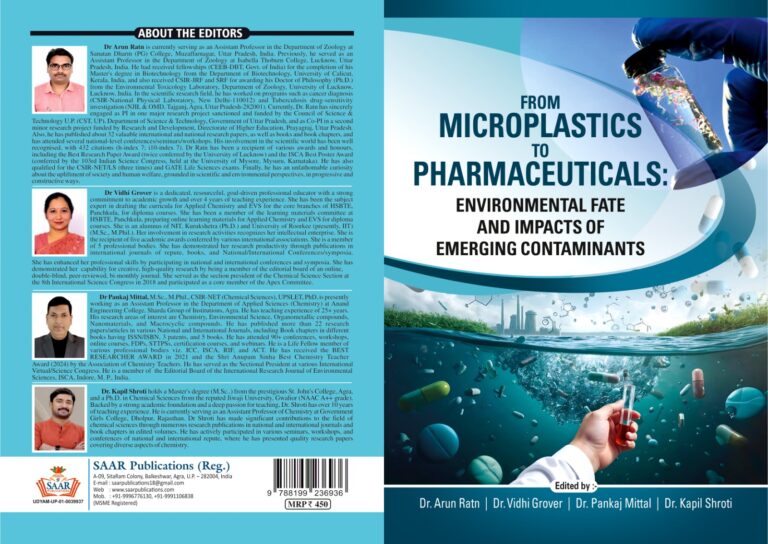
The twenty-first century has witnessed an unprecedented rise in the generation and release of emerging contaminants into the environment. From microplastics that persist in aquatic systems to pharmaceutical residues that infiltrate soil, water, and living organisms, these contaminants have raised significant global concerns. Unlike conventional pollutants, emerging contaminants often escape routine monitoring and regulatory frameworks, yet they pose profound risks to ecological balance, biodiversity, and human health. This edited volume, From Microplastics to Pharmaceuticals: Environmental Fate and Impacts of Emerging Contaminants, brings together multidisciplinary perspectives to address one of the most pressing environmental challenges of our time. By integrating insights from chemistry, environmental science, toxicology, biology, engineering, and policy studies, the book explores the sources, pathways, and impacts of emerging contaminants, while highlighting the latest advances in analytical techniques, mitigation strategies, and sustainable solutions. The chapters in this book are contributed by researchers and practitioners from diverse backgrounds, offering a comprehensive understanding of how emerging contaminants behave in different environmental matrices and how their interactions shape long term ecological outcomes. Special emphasis has been placed on the environmental fate of microplastics, pharmaceutical residues, endocrine disruptors, and other novel contaminants that are increasingly detected in natural ecosystems. The aim of this book is not only to synthesize current knowledge but also to inspire innovative thinking for future research and policy development. It is envisioned as a resource for academics,
researchers, policymakers, industry professionals, and students who are striving to mitigate the growing threat of emerging contaminants and to promote environmental resilience. We extend our sincere gratitude to the contributors whose expertise has shaped this volume, to the reviewers for their valuable feedback, and to the publication team for their support throughout the process. Above all, we acknowledge the collective effort of the scientific community in advancing our understanding of emerging contaminants and their impacts on the environment. We hope that this book serves as both a reference and a catalyst for further research, collaboration, and action toward a cleaner and safer planet.
ABOUT THE EDITORS
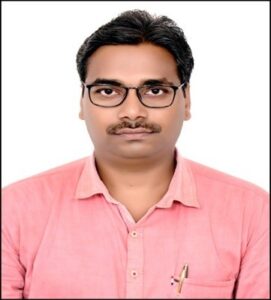
Dr. Arun Ratn is competently working as an Assistant Professor in the Department of Zoology, Sanatan Dharm (PG) College, Muzaffarnagar, Uttar Pradesh, India. Formerly, he has given his educational services as an Assistant Professor in the Department of Zoology, Isabella Thoburn College, Lucknow, Uttar Pradesh, India. He had received fellowships (CEEB-DBT, Govt. of India) for the completion of his Master’s degree in Biotechnology from the Department of Biotechnology, University of Calicut, Kerala, India, and also received CSIR-JRF and SRF for awarding his Doctor of Philosophy (Ph.D.) from the Environmental Toxicology Laboratory, Department of Zoology, University of Lucknow, Lucknow, India. In the scientific research field, he has worked on programs like Cancer diagnosis (CSIR-National Physical Laboratory, New Delhi-110012) and Tuberculosis drug-sensitivity investigation (NJIL & OMD, Tajganj, Agra, Uttar Pradesh-282001). Currently, Dr. Ratn has sincerely engaged as PI in one major research project sanctioned and funded by the Council of Science & Technology U. P. (CST, UP), Department of Science & Technology, Government of Uttar Pradesh, and as Co-PI in a second minor research project funded by Research and Development, Directorate of Higher Education, Prayagraj, Uttar Pradesh. Also, he has published about 32 valuable international and national research papers along with books and book chapters, and attended several national-level conferences/seminars/workshops. His involvement in the scientific world has been well recognized with 432 citations (h-index 07; i10-index 07). Dr. Ratn has been a recipient of various awards and honors, such as Best Research Paper Award (two times conferred by the University of Lucknow) and ISCA Best Poster Award (conferred by the 103rd Indian Science Congress, held at the University of Mysore, Mysuru, Karnataka). He has also qualified for CSIR-NET/LS (three times) and GATE exams in Life Sciences. Finally, he has an unfathomable curiosity for the upliftment of society and human welfare on the basis of scientific and environmental opinions in progressive and constructive ways.
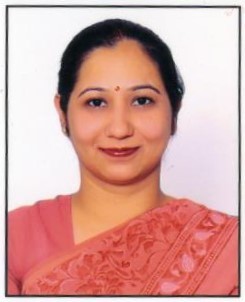
Dr Vidhi Grover is a dedicated, resourceful, goal-driven professional educator with a solid commitment to academic growth, having over 4 years of teaching experience. She has been the subject expert in drafting the curriculum of Applied Chemistry and EVS of the core branches of HSBTE, Panchkula, for diploma courses. She has been a member of the learning material committee of HSBTE, Panchkula, for preparing online learning material for Applied Chemistry and EVS for diploma courses. She is an alumnus of NIT, Kurukshetra (Ph.D.) and University of Roorkee (presently, IIT) (M.Sc., M.Phil.). Her involvement in research activities recognizes her intellectual enterprise. She is the recipient of five academic awards conferred by various international associations. She is a member of 5 professional bodies. She has demonstrated her research productivity through publications in journals of international repute, books and National/International Conferences/symposia. She has enhanced her professional ability by participating in National/International Conferences/symposia. She has demonstrated her capability for creative, high-quality research by being a member of the editorial board of an online, double-blind, peer-reviewed, bi-monthly journal. She has been the section president of the Chemical Science Section at the 8th International Science Congress in 2018 and has participated as a core member of the Apex Committee.

Dr. Pankaj Mittal, M.Sc., M.Phil., CSIR-NET (Chemical Sciences), UPSLET, Ph.D., is presently working as Assistant Professor in the Department of Applied Sciences (Chemistry) in Anand Engineering College, Sharda Group of Institutions, Agra. He has teaching experience of 25+ years. His Research area of interest is Chemistry, Environmental Science, Organometallic compounds, Nanomaterials, and Macrocyclic compounds. He has published more than 22 research papers/articles in various National and International Journals, including Book chapters in different books having ISSN/ISBN, 3 patents, and 5 books. He has attended 90+ conferences, workshops, online courses, FDPs, STTPSs, certification courses, and webinars. He is a Life Fellow member of various professional bodies viz. ICC, ISCA, RIF, and ACT. He has received the BEST RESEARCHER AWARD in 2021 and the Shri Anupam Sinha Best Chemistry Teacher Award (2024) by the Association of Chemistry Teachers. He has worked as the Sectional President in various International Virtual/Science Congress. He is a member of the Editorial Board of the International Research Journal of Environmental Sciences, ISCA, Indore, M. P., India.
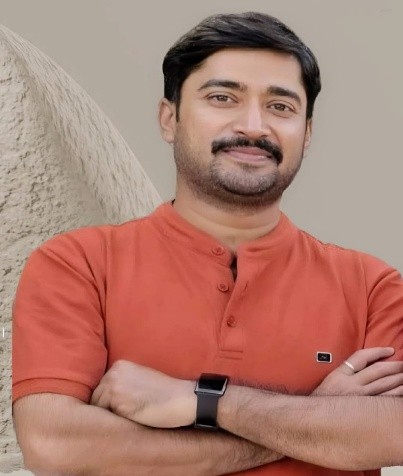
Dr. Kapil Shroti holds a Master’s degree (M.Sc.) from the prestigious St. John’s College, Agra, and a Ph.D. in Chemical Sciences from the reputed Jiwaji University, Gwalior (NAAC A++ grade). Backed by a strong academic foundation and a deep passion for teaching, Dr. Shroti has over 10 years of teaching experience. He is currently serving as an Assistant Professor of Chemistry at Government Girls College, Dholpur, Rajasthan. Dr. Shroti has made significant contributions to the field of chemical sciences through numerous research publications in national and international journals, as well as book chapters in edited volumes. He has actively participated in various seminars, workshops, and conferences of national and international repute, where he has presented quality research papers covering diverse aspects of chemistry.
TABLE OF CONTENTS
| S.No. | Content | Page No.
|
| 1. | Benzo[a]pyrene-Induced Oxidative Stress in Fish: Insights from Biomarkers of Cellular Damage Shikha Dwivedi | 1 |
| 2. | Pesticides, Herbicides and Agricultural Runoff as Emerging Pollutants Sugandha Bhardwaj, Vineeta Yadav, Mohini Singh | 14 |
| 3. | Sources and Pathways of Emerging Contaminants in Natural Systems V Kohsane Vemai, Mohini Singh | 34 |
| 4. | Microplastics and Nanoplastics: Environmental Distribution and Toxic Effects Ranjana Pande, Richa Gaur, Aryan Raj | 62 |
| 5. | Heavy Metals as Co-Contaminants with Emerging Pollutants Vidhi Grover, Anil Kumar | 76 |
| 6. | Microplastics in Aquatic Ecosystems: Sources, Impacts, and Management Approaches Jagriti Singh and Shraddha Dwivedi | 96 |
| 7. | Per- and Polyfluoroalkyl Substances (PFAS): Environmental Occurrence, Exposure Pathways, and Toxicological Implications Yashika Soni and Shraddha Dwivedi | 109 |
| 8. | eDNA Barcoding for the Monitoring of Biodiversity and Abiotic Factors of Aquatic Ecosystems Vaishali, Shefalee Singh and Arun Ratn | 122 |
| 9. | Microplastics and Nanoplastics: Environmental distribution and their toxic effects Chirag Maherday, Aashna Gupta and Arun Ratn | 133 |
| 10. | Endocrine-disrupting Chemicals and their Interventions in the Health Status of Living Organisms Vijay Singh, Arun Ratn and Aashna Gupta | 141 |
| 11. | Biosensors and Nanotechnology-Based Approaches for Trace Pollutant Monitoring Ojeaga Imohiosen, Barau Bilyaminu Wudini, Ibrahim Sani Tela and Musa Ahmad | 153 |
| 12. | Heavy Metals as Co-contamination with Emerging Pollutants Sakshi Saxena, Dinesh Kumar Sharma, Ravi Kant | 162 |