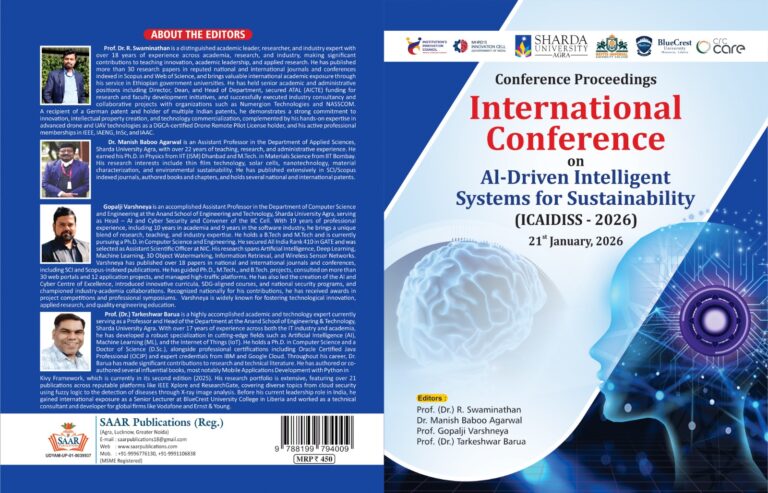
ABOUT THE BOOK
Editors: Prof. (Dr.) R. Swaminathan, Dr. Manish Baboo Agarwal, Prof. Gopalji Varhney, Prof. (Dr.) Tarkeshwar Barua, Dr. Pankaj Mittal, Prof. (Dr.) Viney Sharma, Prof. (Dr.) Arun Yadav, Dr. Divyani Panwar, Dr. Shahjad Ali, Prof. Nidhi Saxena
Published by: SAAR Publications (Reg.)
Language: English
Pages: 136
Edition: January, 2026
ISBN: 978-81-997940-0-9
DOI:
Citation:
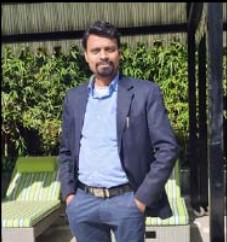
Prof. Dr. R. Swaminathan is a distinguished academic leader, researcher, and industry expert with over 18 years of experience across academia, research, and industry, making significant contributions to teaching innovation, academic leadership, and applied research. He has published more than 30 research papers in reputed national and international journals and conferences indexed in Scopus and Web of Science, and brings valuable international academic exposure through his service in Ethiopian government universities. He has held senior academic and administrative positions, including Director, Dean, and Head of Department, secured ATAL (AICTE) funding for research and faculty development initiatives, and successfully executed industry consultancy and collaborative projects with organizations such as Numergion Technologies and NASSCOM. A recipient of a German patent and holder of multiple Indian patents, he demonstrates a strong commitment to innovation, intellectual property creation, and technology commercialization, complemented by his hands-on expertise in advanced drone and UAV technologies as a DGCA-certified Drone Remote Pilot License holder, and his active professional memberships in IEEE, IAENG, InSc, and IAAC
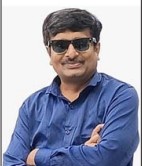
Dr. Manish Baboo Agarwal is an Assistant Professor in the Department of Applied Sciences, Sharda University Agra, with over 22 years of teaching, research, and administrative experience. He earned his Ph.D. in Physics from IIT (ISM) Dhanbad and M.Tech. in Materials Science from IIT Bombay. His research interests include thin film technology, solar cells, nanotechnology, material characterization, and environmental sustainability. He has published extensively in SCI/Scopus indexed journals, authored books and chapters, and holds several national and international patents

Gopalji Varshneya is an accomplished Assistant Professor in the Department of Computer Science and Engineering at the Anand School of Engineering and Technology, Sharda University Agra, serving as Head – AI and Cyber Security and Convener of the IIC Cell. With 19 years of professional experience, including 10 years in academia and 9 years in the software industry, he brings a unique blend of research, teaching, and industry expertise. He holds a B.Tech and M.Tech and is currently pursuing a Ph.D. in Computer Science and Engineering. He secured All India Rank 410 in GATE and was selected as Assistant Scientific Officer at NIC. His research spans Artificial Intelligence, Deep Learning, Machine Learning, 3D Object Watermarking, Information Retrieval, and Wireless Sensor Networks. Varshneya has published over 18 papers in national and international journals and conferences, including SCI and Scopus-indexed publications. He has guided Ph.D., M.Tech., and B.Tech. projects, consulted on more than 30 web portals and 12 application projects, and managed high-traffic platforms. He has also led the creation of the AI and Cyber Centre of Excellence, introduced innovative curricula, SDG-aligned courses, and national security programs, and championed industry-academia collaborations. Recognized nationally for his contributions, he has received awards in project competitions and professional symposiums. Varshneya is widely known for fostering technological innovation, applied research, and quality engineering education.
Prof. (Dr.) Tarkeshwar Barua is a highly accomplished academic and technology expert currently serving as a Professor and Head of the Department at the Anand School of Engineering & Technology, Sharda University Agra. With over 17 years of experience across both the IT industry and academia, he has developed a robust specialization in cutting-edge fields such as Artificial Intelligence (AI), Machine Learning (ML), and the Internet of Things (IoT). He holds a Ph.D. in Computer Science and a Doctor of Science (D.Sc.), alongside professional certifications including Oracle Certified Java Professional (OCJP) and expert credentials from IBM and Google Cloud. Throughout his career, Dr. Barua has made significant contributions to research and technical literature. He has authored or co-authored several influential books, most notably Mobile Applications Development with Python in Kivy Framework, which is currently in its second edition (2025). His research portfolio is extensive, featuring over 21 publications across reputable platforms like IEEE Xplore and ResearchGate, covering diverse topics from cloud security using fuzzy logic to the detection of diseases through X-ray image analysis. Before his current leadership role in India, he gained international exposure as a Senior Lecturer at BlueCrest University College in Liberia and worked as a technical consultant and developer for global firms like Vodafone and Ernst & Young.
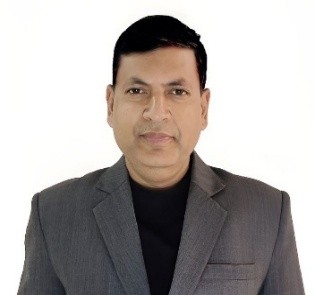
Dr. Pankaj Mittal, M.Sc., M.Phil., CSIR-NET (Chemical Sciences), UPSLET, Ph.D., is presently working as Assistant Professor in the Department of Applied Sciences (Chemistry) in Anand Engineering College, Sharda Group of Institutions, Agra. He has teaching experience of 25+ years. His Research area of interest is Chemistry, Environmental Science, Organometallic compounds, Nanomaterials and Macrocyclic compounds. He has published more than 24 research papers/articles in various National and International Journals, including Book chapters in different books having ISSN/ISBN, 4 patents and 6 books. He has attended 95+ conferences, workshops, online courses, FDPs, STTPSs, certification courses and webinars. He is a Life Fellow member of various professional bodies viz. ICC, ISCA, RIF and ACT. He has received the BEST RESEARCHER AWARD (2021), SHRI ANUPAM SINHA BEST CHEMISTRY TEACHER AWARD (2024) by the Association of Chemistry Teachers and BEST TEACHER AWARD (2025) by Research India Foundation, Bhubaneswar, Odisha, India. He has worked as the Sectional President in the various International Virtual/Science Congress. He is a member of the Editorial Board of the International Research Journal of Environmental Sciences, ISCA, Indore, M. P., India.
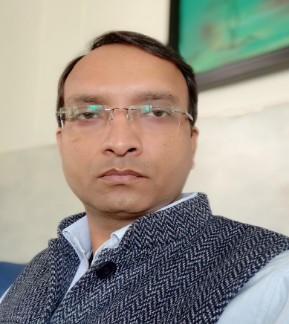
Dr. Arun Kumar Yadav is a distinguished academician with more than 25 years of experience in teaching and research in the field of Computer Science and Engineering. He holds a Ph.D. in Computer Science and Engineering from Veer Madho Singh Bhandari Uttarakhand Technical University, Dehradun, along with B.E. (CSE) and M.Tech (IT) qualifications. His primary research interests span Distributed Database Security, Cloud Computing and IaaS, Fog Computing, and Cloud Computing Architectures. Dr. Yadav is a certified NPTEL expert in Cloud Computing and is an active professional member of the International Association of Engineers (IAENG) and the International Association of Computer Science and Information Technology (IACSIT). He has authored and co-authored more than 55 research publications in reputed SCI, SCIE, SCOPUS, and UGC CARE–indexed journals and international conferences. Currently, he is supervising three Ph.D. scholars and has successfully guided 14 M.Tech dissertations, contributing significantly to research mentoring and academic development. In recognition of his academic excellence and innovative contributions, Dr. Yadav has received several prestigious honors, including the Best Teacher Award, Innovation Award and Best Research Paper Award
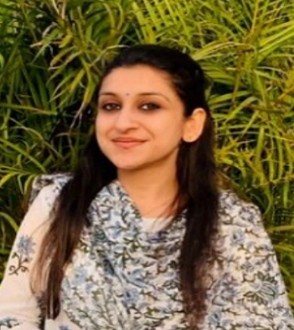
Dr. Divyani Panwar is an Assistant Professor of Biotechnology at Sharda University Agra with specialization in food engineering, sustainable food processing, and agro-industrial waste valorization. She holds a Ph.D. in Food Engineering and Technology and has significant research experience in green extraction techniques and functional food development. She has published extensively in reputed SCI/SCIE journals and has received several national-level fellowships and awards. Her research contributes to circular bioeconomy, waste management, and value-added food product innovation.
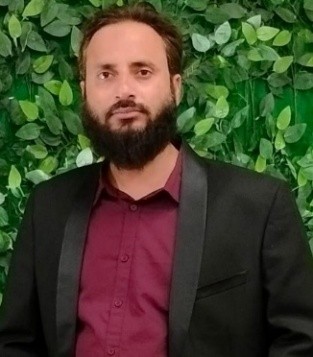
Dr. Syed Shahjad Ali serves as Assistant Professor and Head of the Department of Environmental Science at Anand School of Engineering and Technology, Sharda University, Agra, India. He earned his Ph.D. in Environmental Science from IIT (Indian School of Mines), Dhanbad (2020), focusing on fluoride investigation and defluoridation in Agra groundwater. He also holds an M.Tech. and M.Sc. in Environmental Science from Bundelkhand University. With 15 years of teaching and research experience, he has published 16 papers in Q1/Q2 journals, including Scientific Reports. He holds 8 patents and leads projects on water security and disaster monitoring using machine learning and GIS. Professional Experience Dr. Ali was an Assistant Professor at Anand Engineering College, Agra (2010–2024) before joining Sharda University in April 2024. He teaches courses in Environmental Engineering, Water Pollution, GIS, and Health Risk Assessment. He has coordinated research cells, vermicomposting initiatives, and webinars. Research Focus His expertise spans groundwater quality assessment (WQI, IWQI), health risk assessment via Monte Carlo simulation, and machine learning models (ANN, XGBoost). He specializes in herbal nanoparticle-based water treatment. Notable works address fluoride and nitrate risks in Northern India through probabilistic modeling

Ms Nidhi Saxena is an accomplished academician and researcher currently serving as an Assistant Professor in the Department of Computer Applications at Anand School of Engineering & Technology, Sharda University Agra. With a strong academic foundation and a keen interest in emerging technologies, she has made significant contributions to the fields of cloud computing, information security, data science, artificial intelligence, and machine learning. Her research work primarily focuses on cloud security mechanisms, authentication models, access control frameworks, and threat detection techniques in cloud environments. She has published extensively in reputed national and international journals and conferences indexed in Scopus and ESCI, reflecting both the quality and impact of her scholarly work. Miss Saxena actively engages in research, teaching innovation, and academic events, contributing to curriculum development, expert talks, conferences, and faculty development initiatives. Committed to academic excellence and student-centric learning, she integrates research-driven insights into her teaching methodology. Her work demonstrates a consistent effort to bridge theoretical concepts with practical applications, particularly in the domains of cybersecurity and emerging computing technologies.
TABLE OF CONTENTS
| S.No. | Content | Page No.
|
| 1 | Innovations in the Online Library Management System Kiran Bala, Shaffy | 1 |
| 2 | Emerging Technologies in Entrepreneurial Innovation: AI, Blockchain, and IoT as Drivers of Start-up Transformation Kiran Bala, Prince Khan | 2 |
| 3 | Text Encryption Algorithm Using Magic Square and Logistic Map Narba Rani, Sunil Chauhan | 3 |
| 4 | Authentication and Security Mechanisms in Cloud Computing: A Comparative Study Miss Nidhi Saxena | 4 |
| 5 | A Review of Emotion Triggers in Neuroeconomics: Balancing Validity, Rigor, and Applications Dr. Sruthi Kaviprapu, Dr. Naval Lawande | 5 |
| 6 | Artificial Intelligence–Enhanced Hybrid PET-MRI: Advancing Precision Imaging in Oncology, Neurology, and Cardiology M V Raghavendra, Neelapala Anil Kumar, GGS Pradeep, G. Ramana Murthy, Gnane Swarnadh Satapathi | 6 |
| 7 | Quantum-Enhanced AI/ML Framework for Ovarian Cancer Detection M V Raghavendra, Neelapala Anil Kumar, GGS Pradeep, G. Ramana Murthy, Gnane Swarnadh Satapathi | 7 |
| 8 | Smart IoT-based Organic Hydroponic Agricultural System to Improve Crop Production Mahesh B. Dembrani, Bhumika R. Navasare, Aayush D. Baviskar, Rushikesh J. Patil, Aditi Y. Patil, Anupkumar B. Jayaswal | 9 |
| 9 | Medical Image Encryption Using AES-256 and Chaotic Maps Narba Rani, Mayank Priyadarshi | 11 |
| 10 | IoT Based Remote Monitoring of Alzheimer Patients Using Edge Computing, Fog Computing and CNN V. Ilavarasi, Dr. R. Swaminathan, Dr. Aditi Gupta | 12 |
| 11 | An Intelligent Vision-Based Framework for Automated Fruit Quality Assessment Mahesh Dembrani, Aniket Chaudhari, Janhavi Patil, Bhatesing Ghamande, Anupkumar Jayaswal | 13 |
| 12 | Performance Analysis of Decode and Forward Bidirectional Relaying with Channel Estimation Error and Co-Channel Interference Shilpa, Dr. Shakti Arora | 14 |
| 13 | Using Hybrid Particle Swarm Optimization and Differential Evolution for Sentiment Analysis Kshamta Chauhan, Mohammad Shuaib Khan, Kajal Jain, Neelam Oberoi, Deepender | 15 |
| 14 | Smart Scrap Connect: An AI-enabled Platform for Intelligent Scrap Collection Nishu Sharma, Mehak Sharma, Ujjawal Singh, Nitesh Kumar Vishal, Manoj Kumar Yadav | 17 |
| 15 | Exploiting Linux Systems: A Tactical Analysis of SNOWLIGHT Malware and VShell Tool on Linux Systems Dr. Anand Kumar Gupta, Dr. Asadi Srinivasulu, Dr. Tarkeswar Barua, Dr. Shailesh Kumar, Dr. Kamal Kant Hiran, Dr. Ruchi Doshi | 18 |
| 16 | Enhancing Clinical Decision-Making with Exploratory Data Analysis and Machine Learning Dr. Anand Kumar Gupta, Dr. Asadi Srinivasulu, Dr. Tarkeswar Barua, Dr. Shailesh Kumar, Dr. Kamal Kant Hiran, Dr. Ruchi Doshi | 20 |
| 17 | Design and Implementation of a Secure Transactional Framework for Decentralized Digital Payment Systems Krishna Ravichandran | 22 |
| 18 | UrbanSafe Analytics: A Predictive Data Framework for High-Resolution Traffic Risk Assessment Pratik Bhanushali | 23 |
| 19 | LiteFake Detection using Lightweight CNNs and Model Compression Techniques Vishal Sharma, Dr. Rajesh Singh | 24 |
| 20 | A Review of Emotion Triggers in Neuroeconomics: Balancing Validity, Rigor, and Applications Dr. Sruthi Kaviprapu, Dr. Naval Lawande | 25 |
| 21 | GlassBox Next: A Comprehensive Field Map for Explainable AI Sunitha Kambidi | 26 |
| 22 | FRAME-Lens: Exposing Arbitrariness in “Fair” Models Sunitha Kambidi | 27 |
| 23 | RetinAI: AI-Enabled Retinal Imaging with 90D Lens and Mobile Camera Sarfaraz Ahmed A, Mithunes V, Mohammed Ashif A, Karthikeyan T, Lingeshwaran K V | 28 |
| 24 | QR Code Security: A Survey of Attacks and Challenges for Usable Security Shubh Laxmi, Vikas Patel, Vishwajeet Yadav | 30 |
| 25 | Automated Detection of Cardiac Abnormalities from ECG Signals Dr. D. Menaka, Dharani A, Angelin Sheju, Jeevalatha | 31 |
| 26 | Cardiovascular Disorder Identification Using Artificial Neural Networks Vishnu Singh | 33 |
| 27 | Biodegradable Alternatives to Microplastics: A Review of “White Pollution” Solutions Kiran Bala, Prince Khan | 34 |
| 28 | IoT Enabled Fuel Cell Based Wireless Charging System for Electric Vehicles Kumarasaravanan K, Sridhar R | 36 |
| 29 | AI-based Predicting Gastrointestinal Diseases: A Survey Based on Deep Learning Models Kiran Bala, Palak, Nitin Verma | 37 |
| 30 | CASTE: Cryptography-Aware Steganography with Joint Parameter Optimization Aditya Rauthan, Nageshwar Nath Pandey | 39 |
| 31 | IoT-based Smart Farming using Edge Computing and AI Er. Shaffy, Vivek Kori, Jlex Laimayum | 40 |
| 32 | Machine Learning-Based Crop and Fertilizer Recommendation System Aditya Singh, Shayaan Shaikh, Pridwimn Jha, Rajanala Venkat Kalyan, Avani Bhuva | 41 |
| 33 | Machine Learning and Human Machine in Healthcare: A Systematic Survey Vibhav Krashan Chaurasiya, Dr. Sakshi Rai | 42 |
| 34 | Beyond the Benchmark: A Comparative Analysis of Sarcasm Detection Datasets Eshita Sharma, Naveen Kumar Gondhi | 43 |
| 35 | AI-Enabled Product Integrity Management: Computer Vision for Authenticity and Condition Assessment Muneeb Uddin Syed | 44 |
| 36 | Leveraging Artificial Intelligence for Sustainable Urban Development Areef Khan A, Dr. Manikandan A | 45 |
| 37 | Intelligent Amenity Detection and Requirement Based Ranking System for Rental Properties Vineela Payala, Batchu Anuja Reddy, Mulagapaka Lokesh, Nakka Chakri, Mrs. Sappa Neeraja | 46 |
| 38 | AI Optimized Routing and Resource Allocation for Quantum Enabled Terrestrial Industrial Networks Sathish Krishna Anumula, Harinatha Reddy Chennam, Ranganath Nagesh Tawarre, Balakumar Ravindranath Kunthu | 47 |
| 39 | QueryMate: Linking Natural Language to SQL Queries Riyansh Sachde, Prakarsh Garg, Prof. Avani Bhuva | 49 |
| 40 | Neighbourly: Combining Location Intelligence and AI Recommendations to Empower Home Based Women Workers Kishore Kumar K Muruga Perumal R, Nithinkumar R S Summaia Parveen | 50 |
| 41 | Comprehensive Framework Integrating Multimodal Analysis and User Behavior for Deepfake Detection V. Queen Jemila, Dr. Vidhyasathish | 52 |
| 42 | Re-Architecting AI Systems for Sustainability: Federated and Edge-Enabled Distributed World Modeling Prince Gupta | 54 |
| 43 | A Robust Multimodal AI Approach for Automated Detection of Multiple Pulmonary Conditions in Chest Imaging Prince Sood, Priyanka Sood, Aditi Goyal, Ritu Malik, Shabnam Dhiman, Chandini Dhiman | 56 |
| 44 | A Real-Time Network Intrusion Detection System Using Hybrid Machine Learning Models Addanki Pavani Teja, Venkatraman K, A Jeevan Reddy | 58 |
| 45 | Effect of Network Topology on RPL Performance Metric Suneeta Mishra, Vidushi Sharma, Arpit, Shubh Laxmi, Ayushi Gupta | 60 |
| 46 | Emotion-Aware AI System for Mental Health Evaluation: Combining Questionnaires, User Text, and Conversational Intervention Md Yushuf Reja, Khusi Raghav, Pratham Grewal, Mayank Goyal | 62 |
| 47 | Quantum Computing Transforming the Future of Artificial Intelligence Ramakrishna Vankamamidi, Ponnapati Madhava Reddy, Kavuluru Pavan Kumar, Shaibaz Hussain, Chellam Arunachalam, Kumari Chelladurai | 63 |
| 48 | Emerging Technologies in Entrepreneurial Innovation: AI, Blockchain, and IoT as Drivers of Startup Transformation Kiran Bala, Prince Khan | 64 |
| 49 | Improving Credit Card Fraud Detection through Multi-Model Deep Learning: A Comparative Study of ANN and VGG Networks Neha Bharti, Dr. S K Pandey | 65 |
| 50 | AI-Driven Detection of Zero-Day Cyber Attacks Using Hybrid Deep Learning and Explainable AI Models Anil Saraswata, Nageshwar Pandey | 67 |
| 51 | Symmetry in AI-Based Cyber Threats and Defenses: An Evolutionary Arms Race Prince Sood | 67 |
| 52 | Hybrid AES–Blockchain Framework for Secure Cloud Data Management Mareswaramma Pilli | 68 |
| 53 | Whale Optimization Algorithm Based Demand Side Management for Smart Hospital Microgrids Maria Leona A | 70 |
| 54 | A Sensor-Based Nadi Pariksha Diagnostic Machine Tejendra Singh | 71 |
| 55 | A Hybrid Deep Learning Approach for Chronic Kidney Disease Prediction Using Retinal Features Poojitha Prasad | 72 |
| 56 | Revolutionizing Healthcare Through Digital Twins: A Smart Systemic Approach Harmandeep Kaur | 73 |
| 57 | Privacy-Preserving AI Federated Learning: Healthcare Enhancing Ethical Drug Discovery Shubh Laxmi | 74 |
| 58 | Energy-Optimized RPL: A Regression-Based Framework for Adaptive Link Metric Selection Arpit Verma, Praveen Kumar, Shubh Laxmi | 76 |
| 59 | Comparative Study of CNN Algorithms for Diabetes Prediction Using Tabular Medical Data Shikha Singh | 78 |
| 60 | Learning Complaint Priorities through Multi-Factor Analysis and Reinforcement Based Optimization KSS Sahithi Athreya | 79 |
| 61 | Mathematical Framework for Explainable AI: Using GA and ANN in GPS Trust Management System Dr. Harmanpreet Kaur | 81 |
| 62 | Artificial Intelligence in India: Legality Issues and Challenges Dr. Meenakshi Sharma | 83 |